
The language of no nation
Language barrier has always been a problem when it comes to international communication, one that hinders mutual understanding and sympathy among people of different nations, races, social backgrounds and religions. It is naturally harder to connect with people who do not speak the same language as we do, as we cannot fully comprehend their story without knowing what they speak. On a smaller scale, language difference may break a community whose inhabitants come from all over the world, as one hardly ever speaks to their next-door neighbor. On the larger end of the spectrum, a nation’s language is a tool with which one country dominates another, and people in the colony would see such language as a mere political tool rather than something they wish to know more about.
To prevent such problems from arising, one man took matters upon his own hands. Ludwik Lejzer Zamenhof was born into a Jewish family in the city of Belostok, Russia (now Bialystok, Poland). Where he lived, there were a mixture of all sorts of people: the Russians, the Germans, the Belarusians, the Poles, and other ethnic groups. These groups, however, lived in insolation from one another, as if they were all living in their countries. As observed by Zamenhof: “I was taught that all people were brothers, while outside in the street at every step I felt that there were no people, only Russians, Germans, Poles, Jews and so on..”
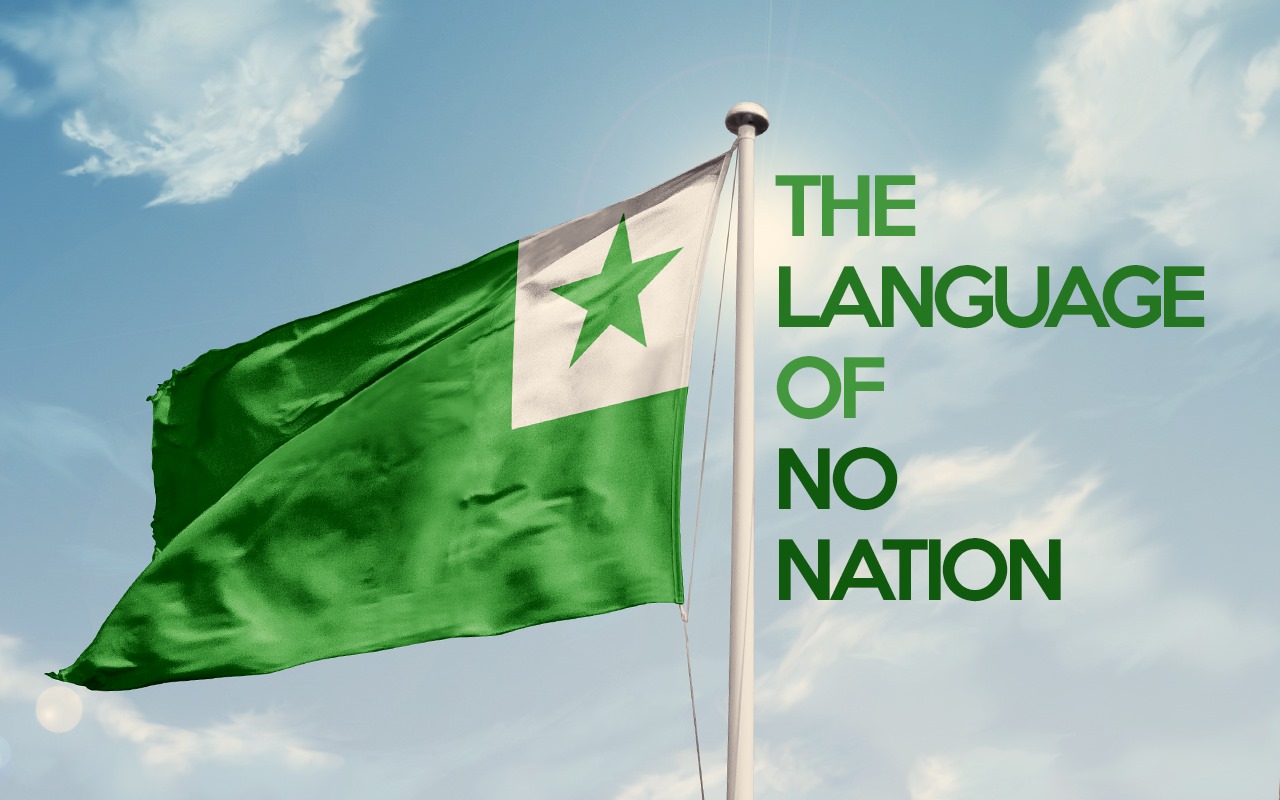
Zamenhof began his work on a new type of language, one that does not originate from any one country or religion, one that is truly by the people and for the people across borders, and one that is so easy that its acquisition is “mere play to the learners”. That was how the language of Esperanto (meaning ‘Hopeful’) came about. With Esperanto, there is no country to force it on another, no competition for influence with other languages, no forces of politics and religions, no borders and no rivalries.
Creating a language was not an easy task. Fortunately, Zamenhof was born a native Russian and Yiddish speaker. He also learned Polish when he was young, and he had great authority over German. He was then aided by his passive understanding of Latin, Hebrew and French, along with some basic understanding of English and Italian. In short, Zamenhof was a man of languages. He began working on Esperanto in his secondary school years, finishing it in 1878. In 1887, a book named ‘International language: Introduction and complete textbook’ was released in Russia. People were interested, and soon an Esperanto-speaking community emerged. His periodical, The Esperantisto, was published, through which speakers could find one another and read his translations of Charles Dickens’s works.
So how easy is Esperanto? For a start, there is only one definite article ‘la’. Grammar rules are strict, but simple without exceptions. Words in Esperanto can be broken down into four parts: Prefix – Root – Suffix – Word Class. There are in total of 10 prefixes, 10 suffixes, and 10 word classes. Users can take a root word, then combine with the other three parts to make up a word, and still can make themselves understood.
For instance, the root ‘san’ means ‘health’. The –o in Word Class means a noun and –a means an adjective, so sano means ‘health’ while sana means ‘healthy’. Adding the prefix mal- and the word becomes malsana, or ‘sick’. Suffix –ul- means a person, thus malsanulo means ‘a sick person’. Squeezing in the suffix –ej- meaning place, and we’ll have malsanulejo, which means a place for sick person, or ‘a hospital’. With around 3000 different roots, the possibilities are endless, but still it is really easy for one to learn word families. It is estimated that one only needs to spend one-tenth the time of learning German to learn Esperanto.
So, what happened to Esperanto? Why a language with such potentials never became the international language as it should be?
The answer is rather complicated. For a start, as soon as Germany became nationalist, the German government regarded Esperanto as a threat to their ruling. At the time, they believed that their breed was the superior among others, and Esperanto meant that people from every race and religion would be able to live in peace together, making Germany ‘a general racial stew’, a disaster to German’s belief. With Zamenhof having a Jewish origin, Esperanto was considered ‘the weapon of the Jews’, and so aside from the Jews, whoever used Esperanto for communication were sent to concentration camp, where they met their demise. In Soviet Russia, under Stalin’s ruling, Esperanto speakers made the same faith, due to a nation-wide ban on the language. However, the language managed to thrive outside of Germany and Russia, and even in prisons people would use Esperanto to communicate, because the guards thought it was Italian.
By the later half of the 20th century, even given the chance to grow into a huge culture, Esperanto never took off. One major reason was the domination of the US, both territorially and culturally, over the world. In governing, English was the language of choice. Countries used USD for international trading. Treaties were written in English. Hollywood and other US media were streamed into people’s homes across nations. With the world wars having ended, and humanity looked forward to a period or peace and mutual growth, there was no more the need for a ‘common’ language, independent of politics, races and religions. Esperanto simply was not the language of choice.
With that said, Esperanto is far from a dead language. With 2 million speakers world-wide, the Esperanto community is alive and well. Esperanto is also used in an educational context, as the basis to how languages work. It has been shown that if a child was exposed to two years of Esperanto, and then learned a foreign language for three years, he or she would be far more capable than someone of the same age who learns the foreign language for 5 straight years. With its implementation in education, the language of Hope is here to stay for years to come.